


Conscious Competence Matrix The Process of Learning a New Skill or Behavior
Conscious Competence Matrix: It is really interesting—and useful—to think about competence. Founders of new ventures do well to think about themselves in terms of competence, in order to be clear about skills that they may need to supplement either by finding a co-founder or by recruitment. It’s also important to consider what sort of competence, or lack of it, one founders can learn, on the job or in a formal training situation.
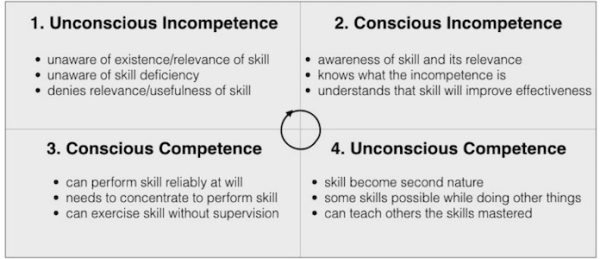
In the figure on the right, called the Conscious Competence Matrix, though sometimes called the Learning Matrix or the Four Stages of Learning, you may recognize your own level of competence in a particular field as well as in managing the startup process itself.
The conscious competence matrix was developed by Noel Burch in the 1970s. I know from my own experience that realizing the process existed, enabled me to move from Box 1 to Box 4, especially as an entrepreneur. Use the matrix to check yourself out.
1. Unconscious Incompetence (ignorance)
The trouble with this state is that you don’t even know what you don’t know. I have come across people who take action like advertising and when it doesn’t work, they just do more. When they find it still doesn’t work, they discover that they have now wasted more money, and time!
2. Conscious Incompetence (awareness)
You know what you’re doing is wrong. This is a good place to be, but only if you are open to the idea of fixing it, through learning or getting help—so give time and reflection to use of the Conscious Competence Matrix.
3. Conscious Competence (learning)
You know you’re doing it right, but it has yet to become second nature, so you have to keep really focus on doing it right.
4. Unconscious Competence (mastery)
This is a lovely place to be. You are so competent that you don’t really have to think about the process at all.
For entrepreneurs to move from knowing what they know (conscious competence) to being competent without having to think about it (unconscious competence) will facilitate faster progress and being better equipped to make decisions and implement them. The consideration of the Conscious Competence Matrix sounds a bit esoteric for someone who just wants to get on with creating a new venture, but actually working on it as part of the startup process could save you time and headaches and get going through the early process of establishing a sustainable business.
Mastery of Conscious Competence
Mastery does not mean being a know-it-all, arrogant or a braggart. Understanding, learning and applying the Conscious Competence Matrix could be as fruitful as securing startup funding.That may sound outrageous to an incompetent person, but it’s not.
Generally, a person who gets to this point in their learning or development, will have no need of such behaviors. Maybe you should mistrust those who boast about their competence. Knowing where you are on the matrix will require self-analysis and honesty. The benefits of knowing, though can be incalculable to the new venture.
If you reach the 4th stage of unconscious competence, you might consider that you’ve reached mastery. The important thing, though, is to have that mastery AND be able to go on learning. As part of the learning I suggest you take a look at Behaviors of Successful Founders. If you want to reflect a bit more on the four stages of competence and incompetence, I also recommend you visit the article by Chris Mayer on The Four Stages of Competence: how we learn every new skill.

